

Table of Contents
Most men view fat loss through a narrow lens of extreme calorie deficits and cheap, synthetic gym gear that wears out in weeks. However, true physical optimization is deeply connected to global efficiency. Sustainable fashion solves a massive environmental crisis by replacing toxic, low-quality activewear with durable, eco-friendly apparel that outlasts your hardest training cycles. Because a high-performance body deserves high-performance gear, this article uncovers the best exercise to lose weight through advanced scientific training models. To achieve true physical optimization, this article provides a complete blueprint on high-yield exercise methodologies alongside strategic insights into building a sustainable, eco-conscious fitness routine inside and outside the gym.
When it comes to stripping away stubborn body fat, the modern fitness landscape can feel incredibly overwhelming. Most individuals view fat loss through a narrow lens of extreme calorie deficits and grueling, unsustainable cardio sessions. However, achieving true physical optimization requires a smarter, scientifically backed framework. To maximize efficiency, one must shift focus toward sustainable lifestyle shifts and highly strategic workout models. This comprehensive guide breaks down the true physiology of metabolic enhancement, helping readers discover the absolute best exercise to lose weight while preserving hard-earned muscle.
The Core Math of Fat Extraction: Basal Metabolic Rate and Energy Balances
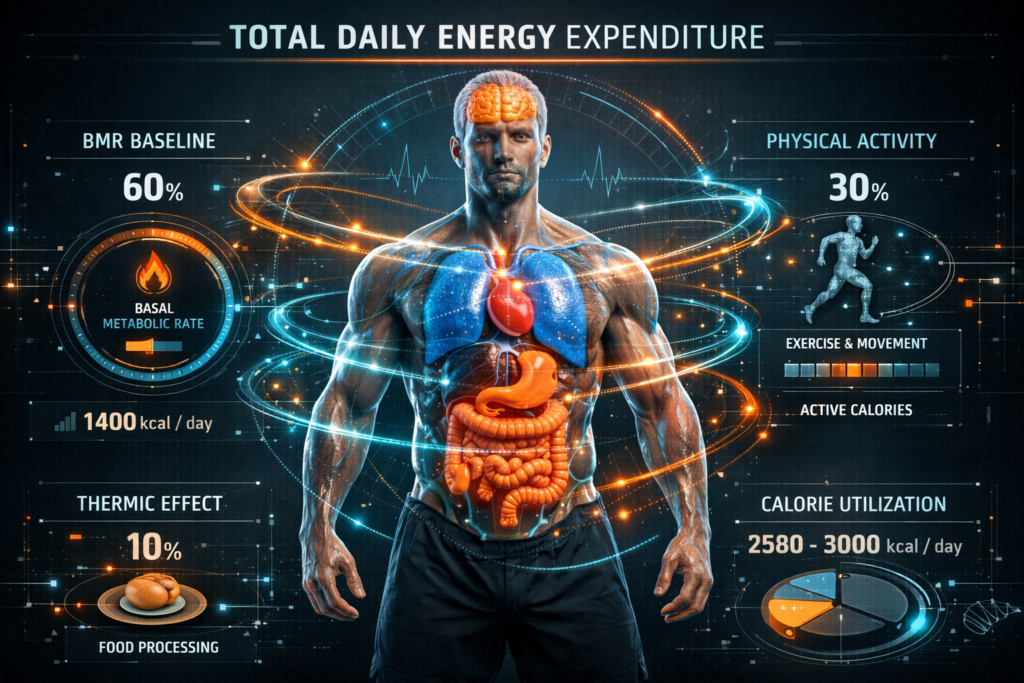
Before stepping foot onto a gym floor, it is vital to understand that fat loss is a metabolic equation governed by physics. Every individual possesses a baseline level of energy expenditure known as the Basal Metabolic Rate (BMR). This metric dictates how many calories the body burns at rest just to keep vital systems functioning. To accurately map out an optimization plan, fitness enthusiasts can calculate this metric using a professional BMR Calculator to set an accurate baseline.
Once the baseline is established, the next layer to consider is the Total Daily Energy Expenditure (TDEE), which accounts for BMR plus all physical activity throughout the day. To force the body to utilize stored adipose tissue for fuel, creating a structural Caloric Deficit is non-negotiable. When the body experiences a well-calculated energy deficit, it naturally seeks out alternative fuel sources, paving a faster way to fat loss. For precise tracking, utilizing an advanced Calorie Calculator ensures that the energy deficit remains safe, structured, and effective over long-term training cycles.
Resistance Training Protocols: Why Lifting Weights Outperforms Traditional Cardio

For decades, traditional logic dictated that spending hours on a treadmill was the premier path to a leaner physique. However, when evaluating cardio vs weight lifting for weight loss, science consistently favors resistance training. While a steady-state cardio session might burn a decent amount of calories during the actual activity, it fails to optimize the body’s metabolic machinery over time.
The secret weapon of weight lifting lies in a physiological phenomenon known as Excess Post-exercise Oxygen Consumption (EPOC). Also referred to as the “afterburn effect,” EPOC ensures that the body continues to consume oxygen and burn calories at an elevated rate for hours—sometimes even days—after the workout has ended.
🏋️♂️ Resistance Training
Burns calories during the workout + Elevates Metabolic Rate for 24-48 hours (EPOC).
🏃♂️ Traditional Cardio
Burns calories ONLY during the actual workout window.
To spark a severe Metabolic Rate Acceleration, the workout must prioritize strategic Resistance Training Protocols. Rather than focusing on small, isolated muscle groups, the foundation of an elite routine should consist of heavy Compound Movements like squats, deadlifts, overhead presses, and rows. These movements recruit multiple joint complexes and massive muscle groups simultaneously, leading to a substantial spike in Energy Expenditure (kcal/hour) during and after training.
Preserving Muscle Architecture While Stripping Fat
One of the biggest pitfalls of poorly designed weight loss programs is the accidental destruction of lean muscle tissue. When individuals drastically drop their food intake without proper physical stimulation, the body frequently catabolizes muscle for energy. Understanding how to lose weight without losing muscle is what separates standard dieters from elite fitness enthusiasts.
The solution lies in triggering Hypertrophy Training stimuli alongside a well-structured Progressive Overload Principle. By consistently forcing the muscles to lift heavier weights or execute more repetitions over time, the body receives an unmistakable neurological signal that the existing muscle is absolutely necessary for survival.
This brings us to the concept of Lean Body Mass Preservation (LBM). Maintaining your LBM is crucial because muscle tissue is highly active metabolically; the more muscle a body holds, the higher its resting metabolic rate becomes. To ensure your body composition is moving in the right direction, a person can routinely check their progress via a Body Fat Percentage Calculator or utilize a targeted Macro Calculator to align their macronutrient intake perfectly with their lean mass requirements. Furthermore, reviewing premium nutritional options like the Highest Quality Whey Protein Isolate can provide the essential amino acids needed to shield muscle tissue from degradation.
High-Intensity Interval Training (HIIT) vs. Low-Intensity Steady-State Cardio (LISS)
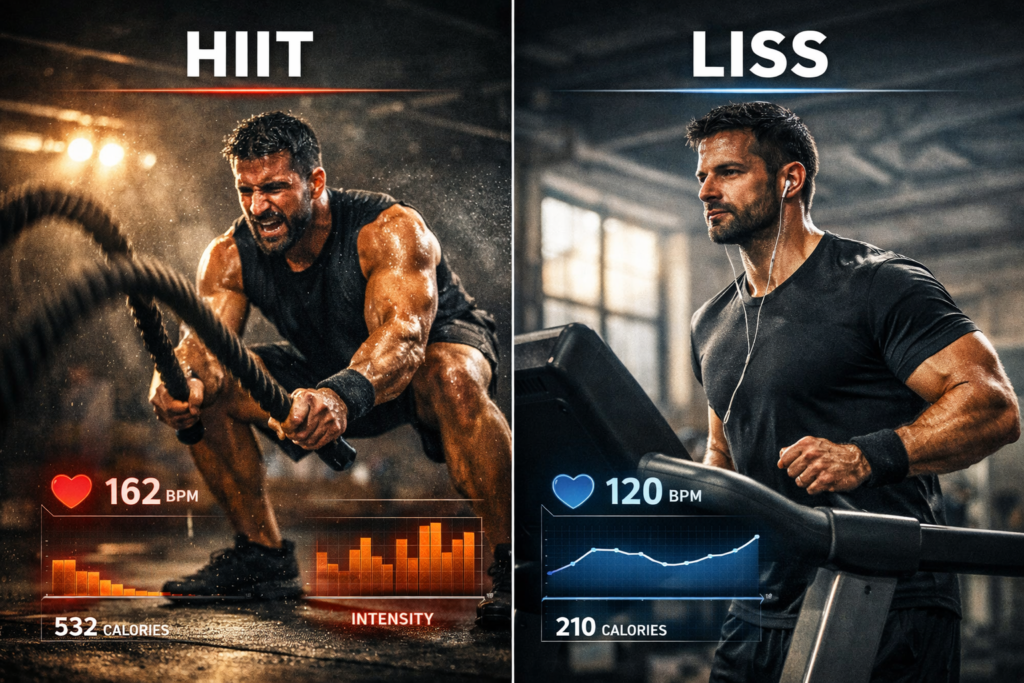
While lifting weights serves as the primary engine for body transformation, incorporating targeted cardiovascular modalities can significantly accelerate the process. The two primary contenders in this space are High-Intensity Interval Training (HIIT) and Low-Intensity Steady-State Cardio (LISS).
🔥 HIIT (High-Intensity Interval)
- Short, explosive bursts of maximum physical effort.
- Triggers high EPOC & Glycogen Depletion inside muscle groups.
- Maximizes overall cardiovascular VO2 Max Efficiency rapidly.
🧘♂️ LISS (Low-Intensity Steady-State)
- Prolonged, moderate, and completely steady physical effort.
- Lower orthopedic joint stress and highly sustainable over long-term cycles.
- Directly targets your optimal, fat-burning Target Heart Rate Zone.
HIIT involves short, explosive bursts of maximum effort followed by brief periods of active recovery. This intense format triggers rapid Glycogen Depletion within the muscle cells, forcing the body to transition into fat-burning states much quicker. Additionally, intense intervals enhance a person’s VO2 Max Efficiency, improving the cardiovascular system’s ability to transport and utilize oxygen effectively.
On the flip side, LISS cardio—such as brisk walking or cycling—remains incredibly valuable. LISS keeps the body firmly planted inside the optimal Target Heart Rate Zone, where the Fat Oxidation Rate is highly optimized. Because LISS causes minimal central nervous system fatigue, it can be utilized frequently without interfering with heavy lifting recovery cycles. To build the absolute ultimate engine for fat loss, a hybrid model combining both modalities yields the best results.
Designing the Ultimate Full Body Workout Routine for Maximum Calorie Burn
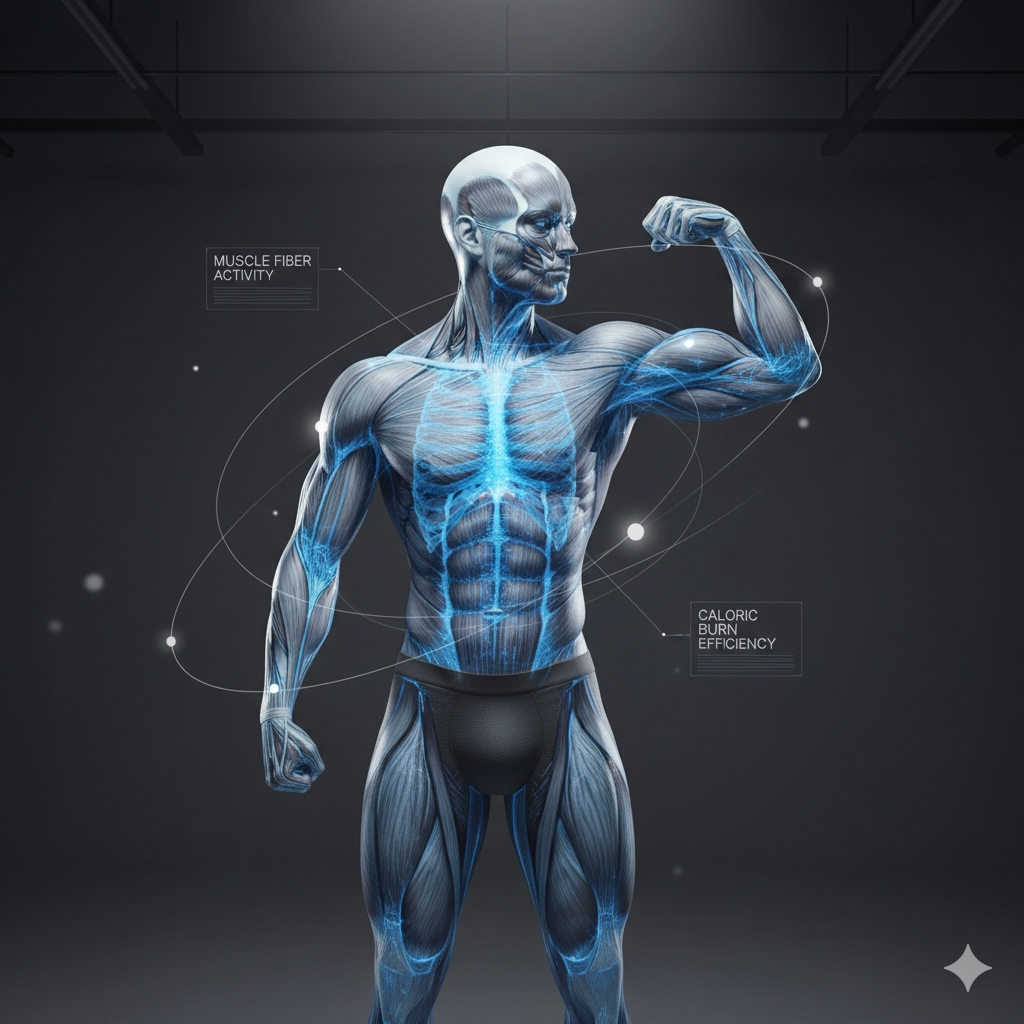
To put these scientific concepts into immediate action, a structured training split is highly recommended. The most efficient framework for optimizing time and metabolic output is a full body workout routine for maximum calorie burn executed three times a week. This approach ensures that every major muscle group is stimulated frequently, keeping the body’s internal furnace burning at maximum capacity.
A premium blueprint for this type of best strength training for fat loss revolves around pairing major movement patterns together. For individuals building out their perfect workout space at home, investing in solid, Affordable Home Gym Equipment allows for seamless execution of these protocols without the need for a commercial gym membership.
Sample High-Yield Strength Blueprint:
- Barbell Back Squats or Dumbbell Goblet Squats: 4 Sets x 8-10 Reps (Targeting the lower body quad-dominant pattern).
- Incline Dumbbell Bench Press: 4 Sets x 8-10 Reps (Targeting the upper body horizontal push).
- Romanian Deadlifts: 3 Sets x 10-12 Reps (Targeting the posterior chain hip-hinge pattern).
- Pull-Ups or Lat Pulldowns: 4 Sets x Max Reps (Targeting the upper body vertical pull).
To maximize safety and accurately track progress within this strength blueprint, tracking your maximum strength levels using a One-Rep Max Calculator allows individuals to safely program their working weights without hitting premature plateaus.
No Equipment? Leveraging Bodyweight Fat Burners and Calisthenics

For individuals who do not have access to weights or traditional gym gear, achieving an elite level of conditioning is still fully attainable. The human body can serve as an incredibly potent resistance tool when utilized correctly through a dedicated Calisthenics Split Routine.
By altering leverage, adjusting tempo, and reducing rest periods, simple bodyweight movements transform into highly effective bodyweight fat burners. Movements such as explosive push-ups, pulling variations, walking lunges, and plank variations work exceptionally well for burning calories. To discover the best fat burning exercises for men at home, one simply needs to structure these movements into high-density circuits. For example, performing a circuit of pull-ups, bodyweight squats, diamond push-ups, and hanging leg raises with minimal rest will spike the heart rate, challenge muscle tissue, and melt away unwanted fat.
Target Locked: Achieving Visceral Fat Reduction and Subcutaneous Fat Loss
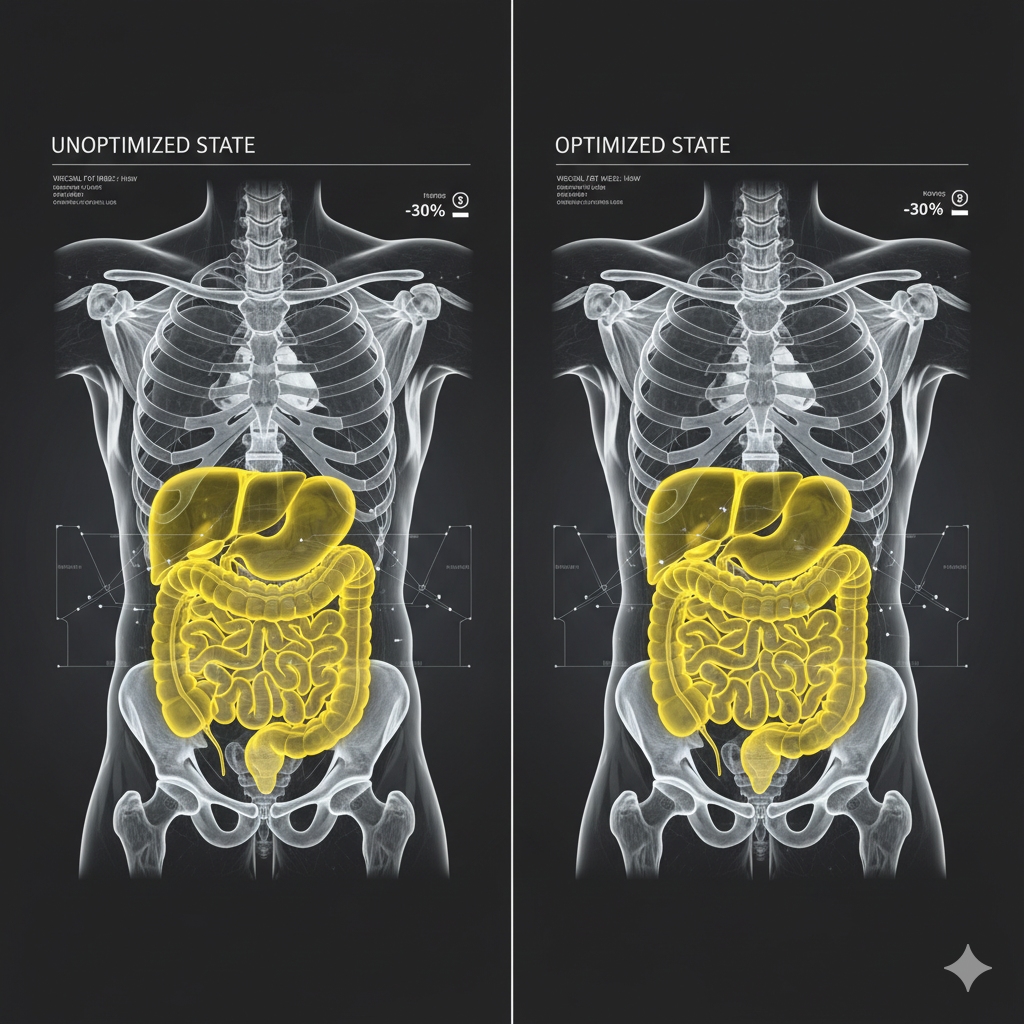
When individuals embark on a weight loss journey, they are dealing with two distinct types of fat tissue: Subcutaneous Fat and Visceral Fat. Subcutaneous fat is the visible layer sitting directly beneath the skin, which soft-seals muscle definition. Visceral fat, however, is the dangerous fat stored deep within the abdominal cavity, wrapping around vital internal organs.
While subcutaneous fat is often a cosmetic concern, high levels of visceral fat pose serious metabolic and cardiovascular health risks. Fortunately, the deep physical stress caused by compound lifting, high-intensity intervals, and structured caloric deficits is exceptionally effective at driving rapid Visceral Fat Reduction.
As these fat stores decrease, overall health markers improve drastically. To check where an individual currently stands regarding body composition health risks, using a quick Waist-to-Hip Ratio Calculator provides an excellent, clinically validated baseline for tracking cardiovascular health improvements. Ultimately, by implementing heavy resistance training, maintaining a clean energy deficit, and fueling the body with precise macro splits, any individual can completely transform their physique, unlock lasting vitality, and build a high-performance body that thrives inside the gym and out.
❓ Frequently Asked Questions
Q1: What is the single best exercise to lose weight for men?
Ans: Mathematically and physiologically, there is no single exercise that works in isolation; however, heavy compound resistance training combined with High-Intensity Interval Training (HIIT) yields the highest calorie burn. This combination accelerates your metabolic rate and triggers an extended afterburn effect (EPOC), forcing the body to burn fat for hours. For optimal output tracking, utilize our BMI Calculator to monitor your mass transitions.
Q2: How can I drop body fat rapidly without losing my lean muscle mass?
Ans: To lose weight without sacrificing muscle, you must maintain a structured caloric deficit while consistently applying the progressive overload principle through resistance training. This signals your nervous system to preserve lean body mass (LBM). To automate this setup, use our advanced Macro Calculator or follow our guide on How to Calculate Macros for Men’s Body Transformation.
Q3: Cardio vs. Weight Lifting: Which one is better for sustainable fat loss?
Ans: Weight lifting outperforms traditional steady-state cardio for long-term fat loss. While traditional cardio only burns calories during the actual window, resistance training spikes your resting metabolic rate and creates glycogen depletion inside the muscles. To map your base parameters correctly before starting, consult our benchmark guide on the Ideal Body Fat Percentage for Men.
Q4: Can I execute an effective fat-burning workout at home without gym gear?
Ans: Absolutely. You can achieve massive energy expenditure at home by leveraging advanced calisthenics split routines and explosive bodyweight fat burners. Exercises like decline push-ups, plyometric lunges, pull-ups, and burpees are exceptionally powerful for driving fat oxidation. To understand alternative tissue metrics, review our breakdown on Understanding Body Adiposity Index (BAI).
Q5: How do I specifically target and reduce stubborn visceral belly fat?
Ans: Visceral fat is highly responsive to systemic metabolic stress. You cannot spot-reduce fat in one specific area, but executing compound movements alongside HIIT sessions forces rapid visceral fat reduction across the entire body. To check where you stand regarding health risks, process your metrics through our Waist-to-Hip Ratio Calculator or read the matching tutorial on How to Calculate Waist-to-Hip Ratio Accurately.
Explore Our Health & Fitness Toolkit
- Decoding the Van Gogh Paradox: “The More You Love, The More You Suffer”

- [The Exterior Blueprint] 7 High-ROI Secrets to Instantly Modernize Your House Exterior Design
- Beyond the 9-to-5: What is Website Earning (And How Modern Men are Building $10K/Month Digital Assets)
- The Waking Protocol: 5 Quick Daily Habits to Trigger Aggressive Testosterone Spikes The 2026 Blueprint
- The Ultimate Weight Lifting Routine to Lose Weight and Build Lean Muscle
- The Ultimate Weight Loss Workout Plan for Men: The 2026 Elite Body Recomposition Blueprint