

Table of Contents
Most men following a standard weight loss workout plan make one critical mistake: they sacrifice hard-earned muscle architecture on the altar of endless, mind-numbing cardio. This flawed approach inevitably crashes your basal metabolic rate, halting deep subcutaneous fat reduction entirely. The problem isn’t your willpower; it’s a lack of structural progressive overload. This article is engineered to solve that exact bottleneck. We dismantle generic weight loss myths and provide a high-performance routine focused on maximizing post-exercise oxygen consumption (EPOC). Inside, you will unlock a practical, battle-tested framework that accelerates metabolic rate while protecting lean mass, giving you a decisive edge in your fitness journey. This article delivers a battle-tested, four-week functional workout blueprint engineered to bypass metabolic adaptation, accelerate visceral fat reduction, and establish a sustainable progressive overload framework tailored for elite male body recomposition.
The Science of Metabolic Acceleration and Fat Loss

To truly dominate a body transformation, a person must look past the bathroom scale and analyze the underlying physiological energy expenditure balance. The journey begins with understanding Total Daily Energy Expenditure (TDEE). Many fitness enthusiasts reduce their food intake drastically without recognizing that caloric management must coordinate with physical output parameters. When a individual executes structural training, they actively manipulate their base energy parameters, paving the way for sustainable Basal Metabolic Rate (BMR) optimization. To optimize these calculations effortlessly, men can utilize an advanced BMR Calculator for Weight Loss to determine their baseline metabolic thresholds.
Traditional training programs focus purely on the calories burned during the actual training window. However, high-performance programming prioritizes Excess Post-Exercise Oxygen Consumption (EPOC). Commonly known as the afterburn effect, elevated EPOC levels force the human body to process oxygen at an accelerated rate for hours after a training session ends. This physiological state triggers a continuous state of energy consumption, leading to deep subcutaneous fat cells depletion. Instead of allowing the body to enter a stagnation phase due to metabolic adaptation, this method continuously forces cellular energy output, successfully hitting critical visceral fat reduction markers that protect internal male organs. To understand the long-term metabolic risks associated with unchecked lipid accumulation, tracking systemic health indicators through a comprehensive PMOS Metabolic Syndrome Guide remains a vital defensive asset.
Why Strength Training Outperforms Cardio for Sustainable Weight Loss
When analyzing best strength training for fat loss, traditional steady-state cardio often falls short. While running on a treadmill burns raw energy during the activity, it fails to alter structural metabolism. True tissue modification requires regular engagement with heavy compound resistance movements. These multi-joint exercises recruit multiple large muscle groups simultaneously, creating a significant metabolic disruption.

The Power of Compound Movements
Implementing heavy compound resistance movements like multi-joint lifts (Squats, Deadlifts, Overhead Press) stimulates systemic muscle recruitment. This massive neuromuscular demand creates extensive glycogen stores depletion inside muscle tissue. When glycogen stores are depleted, the human body is forced to oxidize fat cells to fuel base recovery operations. To construct the ideal physical base safely before lifting heavy iron, individuals must first understand how to properly calculate BMI for men accurately to establish their structural structural benchmarks.
Hypertrophy vs. Strength Rep Ranges
To ensure long-term success, a person must program specific hypertrophy rep ranges (typically 8 to 12 controlled repetitions) within their weekly schedule. Training within these specific mechanical parameters stimulates muscle protein synthesis, preserving crucial lean body mass (LBM) architecture. Maintaining high structural tissue density is the ultimate secret weapon for body transformation; muscle mass is metabolically active tissue, meaning higher retention inherently accelerates everyday resting energy expenditure. For those training outside a commercial facility, outfitting a training zone with affordable home gym equipment allows a person to maintain these critical load thresholds consistently.
Conditioning Strategies: HIIT vs. LISS for Rapid Fat Loss
A master physical blueprint requires a strategic balance between structural resistance work and specialized conditioning modalities.

High-Intensity Interval Training (HIIT) Protocols
To supercharge metabolic rate markers without spending hours on a gym floor, implementing targeted High-Intensity Interval Training (HIIT) protocols is essential. These short, explosive intervals break down glycogen reserves rapidly and spike immediate respiratory rates. The sheer intensity of these circuits triggers massive systemic stress, which keeps the body’s internal engine running at peak capacity for up to 48 hours post-workout.
Low-Intensity Steady-State (LISS) Cardio
Conversely, a complete plan must balance intensity with strategic recovery using Low-Intensity Steady-State (LISS) cardio. Activities such as fast walking or steady cycling allow an individual to burn fat directly without causing excessive nervous system fatigue or dangerous cortisol spikes. Utilizing LISS on active recovery days ensures steady blood flow to healing muscle fibers, aiding tissue repair while systematically maintaining a consistent daily energy deficit.
The Ultimate 4-Week Weight Loss Workout Routine
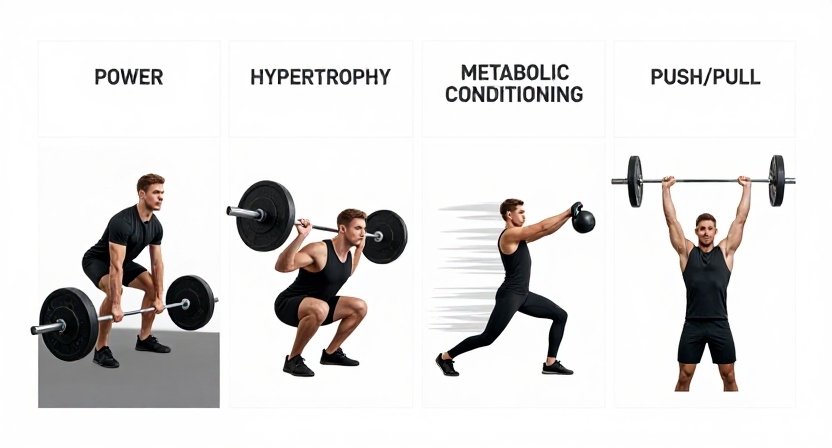
The core of this strategy is a structured 4-week functional workout routine split. This system alternates structural lifting sessions with targeted metabolic conditioning circuits to maximize energy expenditure while ensuring optimal recovery parameters. To perform these intensive compound movements at maximum capacity, an athlete can benchmark their structural power using a dedicated One-Rep Max Calculator to adjust weekly intensity metrics.
| Training Day | Primary Operational Focus | Core Kinetic Structural Layout |
| Day 1 | Upper Body Power | Heavy Bench Press, Rows, & Short HIIT Finisher |
| Day 2 | Lower Body Hypertrophy | Barbell Squats, Romanian Deadlifts, & Core Stability |
| Day 3 | Active Structural Recovery | 45 Minutes of Dedicated LISS Cardio (Walking) |
| Day 4 | Full Body Metabolic Conditioning | High-Yield metabolic conditioning circuits |
| Day 5 | Push / Pull Focus | Targeted Hypertrophy Rep Ranges for Upper Body |
| Day 6 | Systemic Recovery | Structural Rest & Light Mobility Operations |
| Day 7 | Systemic Recovery | Full Rest & Core Nutrient Reload |
No-Equipment Weight Loss Workouts: Calisthenics Protocols

Access to a commercial gym facility should never be a limiting factor for male body transformation. An individual can drive incredible cardiovascular demand and caloric burn using advanced at-home bodyweight fat burners. The trick lies in structuring the exercises logically to keep the heart rate inside the optimal fat oxidation zone.
Utilizing explosive bodyweight circuits—such as decline push-ups, plyometric lunges, pull-ups, and mountain climbers—allows for severe muscular fatigue without external weight load. Grouping these movements into high-yield calisthenics split programs builds relative physical strength while maintaining a high heart rate. This format effectively mimics the cardiovascular demands of a gym-based conditioning session, offering an elite alternative for home training.
Fueling the Machine: Nutritional Synchronization for Weight Loss

Physical training is simply the tool that sparks internal adaptation; nutrition is the mechanism that delivers the physical change. To strip body fat while building or maintaining structural tissue, a individual must understand how to lose weight without losing muscle. This complex balancing act requires strict adherence to a precise targeted caloric deficit.
A proper nutritional plan requires an accurate macronutrient ratio generation protocol. Restricting all food groups blindly causes the body to break down valuable skeletal tissue for energy. To streamline this process, using a precise tool to calculate macros for men’s body transformation removes the guesswork from meal structuring. Implementing a strict protein prioritization matrix ensures that the amino acid pool remains fully saturated. This safeguard protects lean body mass (LBM) architecture from being consumed as fuel during intensive training sessions, ensuring the body shifts its energy demands entirely toward burning stored body fat. To supplement this matrix cleanly, selecting the cheapest whey protein isolate for muscle gain keeps tissue repair optimized without adding unwanted liquid calories.
Execution Blueprint: Transitioning Plan into Practice
True body recomposition is a game of consistent, scientific execution. By moving away from basic, unoptimized programs and adopting a system built around a true progressive overload framework, a person can systematically reset their resting metabolic rate. Tracking weekly strength metrics, ensuring adequate recovery sleep windows through a dedicated Sleep Calculator, and maintaining structural nutritional consistency will permanently shift base physical parameters, delivering a powerful, lean, and highly functional athletic physique.
Frequently Asked Questions (FAQs)
Q1: What is the best strength training for fat loss without losing muscle?
The best strength training approach involves prioritizing heavy compound resistance movements structured within a progressive overload framework. Instead of using excessive isolation exercises or high-rep schemes that fail to stimulate growth signal patterns, an individual should train within hypertrophy rep ranges (8–12 repetitions). This approach stimulates systemic protein synthesis and protects lean body mass (LBM) architecture, keeping the resting metabolic engine highly active even during a caloric restriction phase.
Q2: How does a targeted caloric deficit protect lean body mass architecture?
A targeted caloric deficit forces the human body to utilize stored energy reserves for base metabolic actions. However, if the deficit is too severe or lacking nutritional structure, the body will catabolize structural muscle mass. By pairing a strategic energy reduction with a strict protein prioritizatiCheapest Whey Protein Isolate for Muscle Gain: 2026 Elite Guideon matrix and an accurate macronutrient ratio genHow to Calculate Macros for Men’s Body Transformation 2026 Tipseration setup, you can force the body to preserve skeletal tissues while accelerating deep adipose tissue breakdown.
Q3: Why are compound resistance movements preferred over standard cardio in a weight loss workout plan?
While traditional cardio burns raw energy exclusively during the execution window, it fails to alter structural cellular thresholds. Heavy multi-joint movements create extensive glycogen stores depletion and intense physical trauma within target muscle units. This disruption sparks Excess Post-Exercise Oxygen Consumption (EPOC), ensuring that your systemic energy burning systems operate at an elevated rate for up to 48 hours post-workout, accelerating both subcutaneous and visceral fat clearance.
Q4: How often should High-Intensity Interval Training (HIIT) protocols be scheduled?
Due to the intense neurological demand that high-yield conditioning places on the human body, dedicated High-Intensity Interval Training (HIIT) protocols should only be executed 2 to 3 times per week, layered between low-stress lifting days. Over-scheduling explosive metabolic conditioning circuits can lead to chronic fatigue or systemic cortisol spikes. Balancing these high-output sessions with active recovery windows utilizing Low-Intensity Steady-State (LISS) cardio preserves optimal recovery timelines.
Q5: Can an individual execute an effective weight loss workout plan entirely at home?
Yes, a highly effective transformation can be executed using advanced at-home bodyweight fat burners structured into specialized calisthenics split programs. The secret lies in maintaining strict density control and brief rest periods between exercises to sustain an elevated heart rate within the fat-burning zone. This method effectively mimics gym-based metabolic circuits, triggering significant respiratory output and long-term fat oxidation without needing specialized external machines.
Explore Our Health & Fitness Toolkit
- Decoding the Van Gogh Paradox: “The More You Love, The More You Suffer”

- [The Exterior Blueprint] 7 High-ROI Secrets to Instantly Modernize Your House Exterior Design
- Beyond the 9-to-5: What is Website Earning (And How Modern Men are Building $10K/Month Digital Assets)
- The Waking Protocol: 5 Quick Daily Habits to Trigger Aggressive Testosterone Spikes The 2026 Blueprint
- The Ultimate Weight Lifting Routine to Lose Weight and Build Lean Muscle
- The Ultimate Weight Loss Workout Plan for Men: The 2026 Elite Body Recomposition Blueprint