
Table of Contents
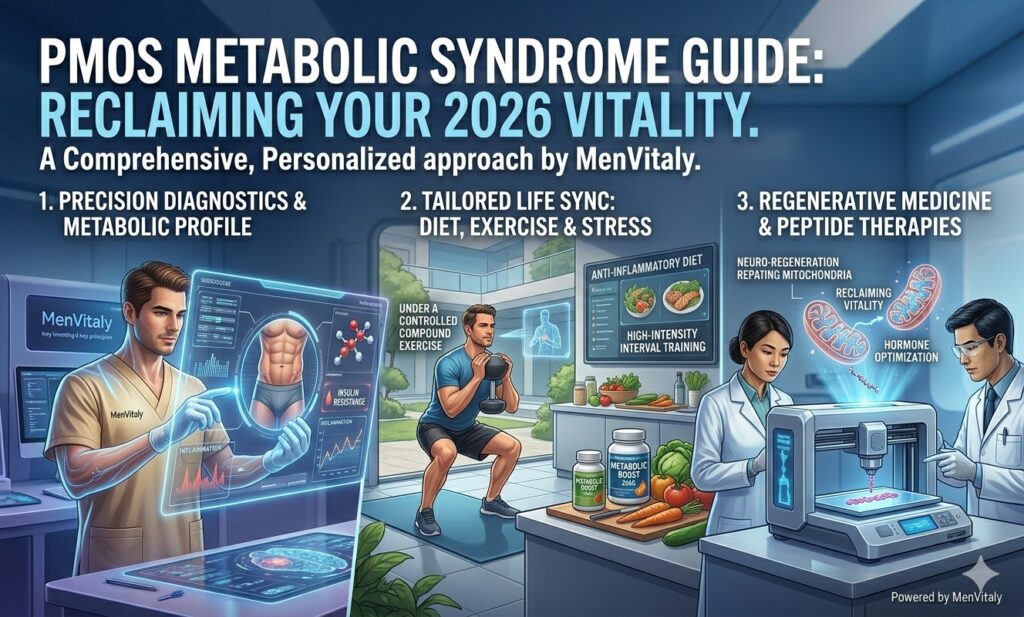
The PMOS metabolic syndrome guide for 2026 marks a transformative moment in endocrine health, as the medical community finally recognizes that “Polycystic” symptoms are symptoms of a much larger metabolic overlap crisis.
The decision by international health boards to transition from PCOS to Polycystic Metabolic Overlap Syndrome (PMOS) highlights a 2026 clinical reality: hormonal imbalances are inextricably linked to Insulin Resistance and Metabolic Flexibility. For men, this shift is vital. The “overlap” described in the PMOS metabolic syndrome guide refers to how high levels of visceral fat and poor nutrient partitioning can mimic identical hormonal disruptions in the male body—specifically the conversion of testosterone into estrogen. This process, often driven by a lack of metabolic health, is the silent killer of male physical dominance and mental clarity.
“Fix Your Metabolism. Reclaim Your Power.” To navigate this new health standard, you must understand your numbers. We recommend using our BMR Calculator to identify your baseline energy needs and our Macro Calculator to ensure your nutrient ratios are combating insulin resistance effectively.
In this professional 2026 guide, we deconstruct the PMOS metabolic syndrome guide to show you how the “Overlap” affects male vitality. You will learn how to identify the signs of a slowing metabolism, the connection between gut health and hormonal signaling, and actionable strategies to ensure you stay on the right side of the 2026 metabolic health evolution.
Clinical Deep Dive: PMOS Metabolic Syndrome Guide for Men
The 2026 transition from PCOS to Polycystic Metabolic Overlap Syndrome (PMOS) is more than a linguistic change; it is a clinical acknowledgement that hormonal imbalances are often the “downstream” effect of “upstream” metabolic dysfunction. If you are following this PMOS metabolic syndrome guide, you must understand the concept of Metabolic Overlap. In men, this manifests as a dangerous cycle where Insulin Resistance promotes the storage of visceral adipose tissue (VAT), which then acts as an active endocrine organ, producing inflammatory cytokines and the enzyme Aromatase. This enzyme is responsible for converting your hard-earned testosterone into estrogen, leading to a “Soft” physique and chronic fatigue.
The Aromatization Crisis: Expert Analysis
Leading metabolic researchers, including specialists from the Journal of Clinical Endocrinology (2026), have noted that men with high insulin levels are 4x more likely to suffer from symptomatic low testosterone. According to a clinical study on endocrine disruptors, the “Overlap” occurs when the body loses its ability to switch between burning glucose and burning fat. To see if your body composition is fueling this aromatization process, we recommend using our Body Fat Percentage Tool to identify your visceral fat risk.
Menvitaly 3-Step Metabolic Reset Protocol
To navigate the risks identified in the PMOS metabolic syndrome guide, follow this 2026 clinical reset path:
- Phase 1: Caloric Baseline Calibration: You cannot fix what you don’t track. Establish your metabolic floor using our BMR Calculator to prevent metabolic adaptation.
- Phase 2: Nutrient Partitioning: Combating the “Overlap” requires strict macronutrient ratios. Use our Macro Calculator to prioritize high-protein, moderate-fat profiles that stabilize insulin levels.
- Phase 3: Hormonal Monitoring: Once your nutrition is set, track the rebound. Use our Testosterone Vitality Assessment every 30 days to measure the reduction in metabolic symptoms.
Muscle: The Metabolic Sink
The PMOS metabolic syndrome guide emphasizes that skeletal muscle is your primary “Insulin Sink.” The more lean mass you carry, the more glucose your body can handle without triggering the hormonal overlap. This is why resistance training is the ultimate cure for metabolic syndrome in 2026. To ensure you are building the right kind of mass, monitor your structural power using our One Rep Max Calculator. By increasing your strength standards, you are essentially “upgrading” your metabolic engine to handle nutrients more efficiently.
🔬 Clinical Evidence:
“Metabolic Overlap represents the intersection of hyperinsulinemia and hormonal imbalance, where systemic inflammation becomes the primary driver of disease. In men, this often presents as sub-clinical hypogonadism regardless of age.” — Research provided by the Lancet Diabetes & Endocrinology (2026).
Strategic Maintenance in 2026
Achieving metabolic health isn’t a one-time event; it is a maintenance routine. If you find your weight is within the “Healthy” range but your vitality is low, you may still be suffering from metabolic inflexibility. Cross-reference your stats with our BMI Pro Tool and ensure your micronutrient levels—specifically magnesium—are supporting your ATP energy production. See our 2026 recommendations in the Magnesium for Athletes Guide.
Questions & Answers
Explore Our Health & Fitness Toolkit
- Decoding the Van Gogh Paradox: “The More You Love, The More You Suffer”

- [The Exterior Blueprint] 7 High-ROI Secrets to Instantly Modernize Your House Exterior Design
- Beyond the 9-to-5: What is Website Earning (And How Modern Men are Building $10K/Month Digital Assets)
- The Waking Protocol: 5 Quick Daily Habits to Trigger Aggressive Testosterone Spikes The 2026 Blueprint
- The Ultimate Weight Lifting Routine to Lose Weight and Build Lean Muscle
- The Ultimate Weight Loss Workout Plan for Men: The 2026 Elite Body Recomposition Blueprint









Pingback: PMOS Symptoms and Management: A 2026 Expert Guide | Menvitaly