
Table of Contents
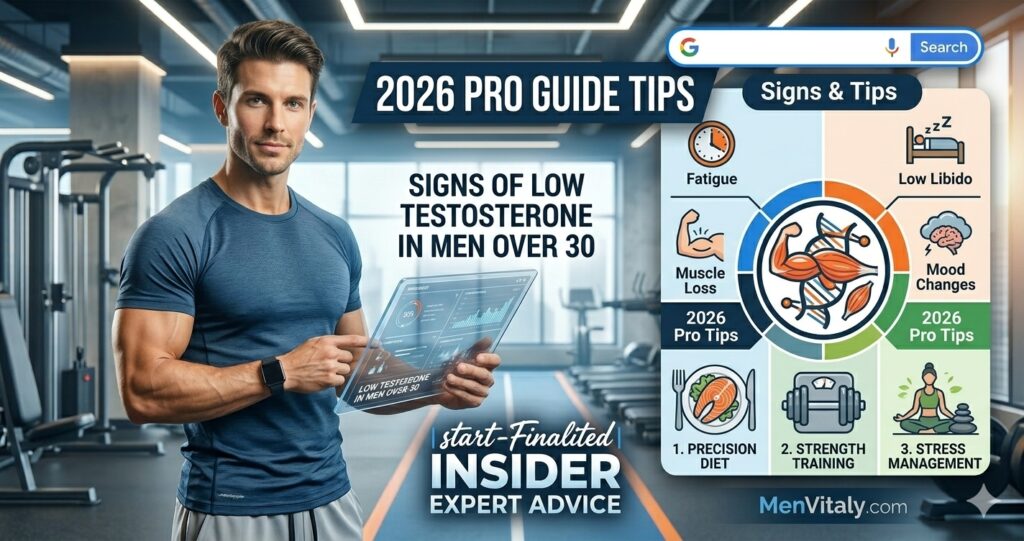
Crossing the threshold of 30 is often a peak time for a man’s career and family life, but biologically, it marks the start of a silent transition. Research shows that after age 30, a man’s testosterone levels begin to decline by about 1% to 2% every year. While this is natural, many men experience a much sharper drop that affects more than just their physique. If you’ve noticed a sudden lack of motivation or a dip in your usual strength, understanding the signs of low testosterone in men over 30: 2026 pro guide tips and early detection strategies are essential for maintaining your edge.
At Menvitaly, we believe that hormonal health is the foundation of everything—from your performance in the gym to your mental clarity at work. Unfortunately, most men only associate “Low T” with a decreased libido, ignoring more subtle red flags like persistent fatigue, “grumpy” moods, or even a decrease in height. In 2026, you don’t have to wait for a clinical crisis to take control of your health. By recognizing the early warning signs and using data-driven assessment tools, you can identify hormonal gaps before they impact your quality of life. In this pro guide, we’ll reveal the hidden symptoms of declining vitality and how you can accurately track your status today.
Menvitaly Vitaly Check-up
Are you operating at 100%? Our Hormonal Risk Assessment goes beyond simple metrics. We analyze physical strength, libido, and mental health markers to provide you with a precise 2026 Vitality Score.
The Vitality Ecosystem: Combine your score with our Sleep Analyzer to fix recovery gaps and the BMI Tool to track body composition.
Beyond Libido: Recognizing the “Silent” Signs of Low T in 2026
While most men focus on the physical aspect of training, hormonal health often whispers before it screams. When searching for signs of low testosterone in men over 30: 2026 pro guide tips often highlight muscle loss, but the most telling symptoms are those that impact your skeletal structure and mental state.
1. Bone Density & The “Lost Height” Mystery
One of the most overlooked markers in our Vitaly Check-up is the loss of height. Testosterone plays a vital role in bone mineralization. As levels dip after 30, bone density can decrease, leading to subtle changes in height. According to the Mayo Clinic, maintaining optimal T-levels is essential for skeletal integrity in aging men. To ensure your weight is healthy relative to your frame, always cross-reference your height with our Ideal Weight Calculator.
2. Cognitive Vitality: The “Grumpy” Man Syndrome
Low testosterone isn’t just about strength; it’s about your brain. If you find yourself feeling frequently sad, “grumpy,” or losing your usual enjoyment of life, it may not be “mid-life stress”—it could be hormonal. Testosterone helps regulate neurotransmitters that manage mood. Tracking your hormonal status is as important as tracking your nutrition with our Macro Calculator.
✅ Pro Strategy for 2026:
If your Vitality Score indicates high risk, the first 2026-compliant steps are lifestyle-based:
- Optimize Micronutrients: Ensure adequate Zinc and Vitamin D intake.
- Heavy Compound Lifts: Prioritize squats and deadlifts to stimulate natural production.
- Sleep Synchronization: Aim for 7-9 hours of cycle-optimized rest.
Explore Our Health & Fitness Toolkit
- Decoding the Van Gogh Paradox: “The More You Love, The More You Suffer”

- [The Exterior Blueprint] 7 High-ROI Secrets to Instantly Modernize Your House Exterior Design
- Beyond the 9-to-5: What is Website Earning (And How Modern Men are Building $10K/Month Digital Assets)
- The Waking Protocol: 5 Quick Daily Habits to Trigger Aggressive Testosterone Spikes The 2026 Blueprint
- The Ultimate Weight Lifting Routine to Lose Weight and Build Lean Muscle






Pingback: Penn State Brain Cleaning Study 2026: Trigger Elite Recovery Tips
Pingback: Salmonella Snack Recall 2026: Full List & Elite Gut Recovery Tips
Pingback: Glioblastoma Breakthrough 2026 Guide: Elite Brain Longevity Tips
Pingback: Vehicle Recall Safety Stress: Managing 2026 Anxiety (Expert Guide)
Pingback: PMOS Metabolic Syndrome Guide 2026 The Ultimate Vitality Shift
Pingback: What is Ebola Virus? Symptoms, Transmission, Treatment, Prevention & 2026 Outbreak Update