
Protein Calculator for Men: How Much Protein Per LB Do You Need?
Protein Profile
OPTIMAL MEAL SPLIT:
Optimizing Protein Intake for Muscle Protein Synthesis
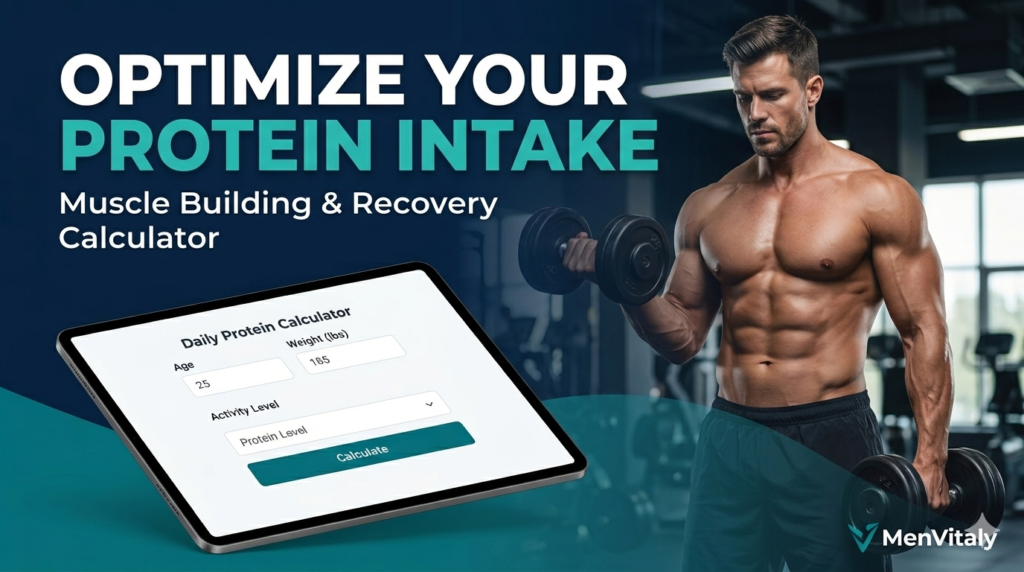
Achieving your physique goals depends on one critical factor: how much protein per lb of body weight you consume daily. To trigger Muscle Protein Synthesis (MPS) and maintain a positive nitrogen balance, our protein calculator for men uses science-backed formulas to determine your daily protein requirement based on lean body mass and training intensity.
The Science: How Many Grams of Protein Per LB of Body Weight?
Standard fitness guidelines often leave men confused about their macronutrient distribution. The most accurate way to fuel hypertrophy is by calculating grams of protein per lb of body weight. For most active men, the protein per lb body weight ratio typically falls between 0.8g to 1.2g. While high-quality amino acids are king, you must balance your caloric intake using our TDEE Calculator to ensure you aren't in an accidental deficit.
Protein Requirements: Sedentary vs. Athlete
Your bioavailability needs change based on your Physical Activity Level (PAL). A sedentary man might only need 0.36g per pound, but an athlete focusing on muscle recovery requires significantly more to prevent catabolism. Use our protein calculator alongside the Macro Calculator to fine-tune your whey protein or whole food intake.[cite: 1]
Frequently Asked Questions (FAQ)
Q1: How many grams of protein per lb of body weight is ideal for bulking?
A: For a lean bulk, a ratio of 0.8g to 1g of protein per lb is the gold standard. Excess protein beyond this doesn't necessarily speed up growth but can increase the Thermic Effect of Food (TEF).[cite: 1]
Q2: How much protein per lb do I need during a weight loss cut?
A: When in a deficit, how much protein per lb of body weight you eat is vital to protect lean muscle tissue. We recommend 1g to 1.2g per lb during a cut. Check your Body Fat Percentage to get a more accurate lean mass calculation.[cite: 1]
Q3: Does my protein requirement change with age?
A: Yes, to fight sarcopenia (natural muscle loss), older men require a higher leucine content and more total protein. Regularly assess your daily protein requirement for men to maintain strength.[cite: 1]
Disclaimer: Nutritional needs vary. This tool provides estimates based on Mifflin-St Jeor and standard fitness industry formulas. For optimal health, monitor your Water Intake to support kidney function during high-protein diets.[cite: 1]
How to Calculate Protein Intake for Men Accurately
If you are serious about optimizing your physique, tracking weight configuration alone is a baseline mistake. To protect your metabolic health and trigger true skeletal muscle synthesis, tracking your macronutrient distribution is vital. Knowing exactly how much protein to build muscle calculator metrics require is the foundation of high-performance nutrition. Our professional protein calculator eliminates the generic guidelines and maps out your precise daily protein requirements based on actual exercise load and physical output.
For men aiming for body recomposition or fat loss, protein intake directly dictates your lean mass protection, recovery speed, and daily satiety levels.
The Sports Science Behind Amino Acid Requirements
While standard government health guidelines often recommend a minimal baseline (0.8 grams per kilogram of body weight), this baseline is completely insufficient for active men, strength trainers, or individuals working out in a home gym setup. Clinical sports nutrition metrics require a much more aggressive approach to maintain a positive nitrogen balance:
- Sedentary/Maintenance Baseline: 1.0 to 1.2 grams per kilogram to offset standard muscle degradation.
- Endurance Training Track: 1.4 to 1.6 grams per kilogram to support cellular repair and cardiovascular stamina.
- Hypertrophy and Strength Range: 1.6 to 2.2+ grams per kilogram (approximately 0.8 to 1.0 grams per pound of lean mass) to drive muscle tissue growth and recovery.
Our computational engine integrates these precise scaling factors, adjusting your daily nutritional target based on your goals—whether you are in a heavy calorie surplus or a strict fat-loss deficit.
Advanced Progression: Beyond the Protein Calculator
Once you establish your target daily protein requirement using our tool, your next step is strategic macronutrient partitioning. Meeting a high protein threshold solely through whole foods can sometimes overshoot your daily calorie limits. To manage this efficiently, clean supplementation is key. Integrating a top-rated, low-calorie whey protein isolate into your routine ensures you hit your hypertrophy thresholds without storing excess body fat.
To keep your physical trajectory sharp, always cross-reference your nutritional intake with your actual physical output. Utilize our advanced one-rep max calculator to accurately monitor your strength metrics, ensuring that your protein intake is successfully fueling deep muscular power and structural recovery.
